
Flies aren’t just annoying. They are also potential carriers of serious illnesses. These pests can transmit bacteria, including Salmonella and E. coli, leading to contamination concerns for your business. Even a small number of flies can quickly multiply if the conditions are right. Simple fixes like sprays or swatters often don’t work because they fail to target the source of the problem.
Commercial fly control experts, like Bug Out, focus on fly elimination by treating all stages of the fly lifecycle.
Download Fly Facts Infographic
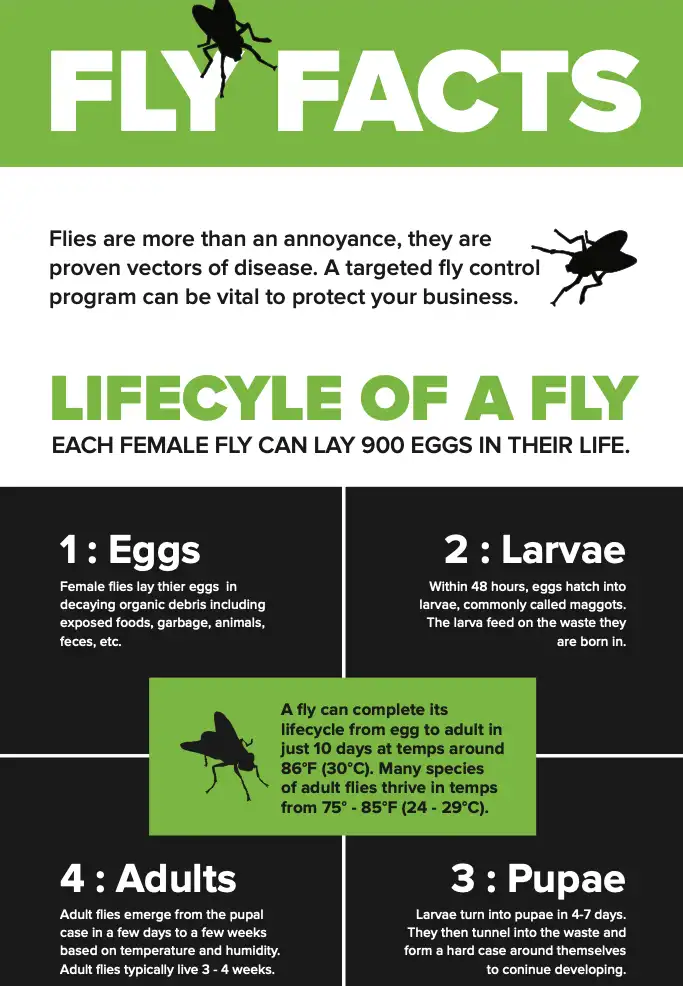
Flies are more than an annoyance, they are proven vectors of disease. A targeted fly control program can be vital to protect your business. Learn more about flies with these facts.
Download Your CopyThe Fly Lifecycle Explained
Controlling a fly infestation can be challenging due to their fast reproduction rate. A single female may lay up to 900 eggs, which can hatch into maggots within two days. These larvae feed on rotting organic matter and can mature into adult flies in only 10 days if the environment is ideal. Here’s a closer look at every stage in the fly lifecycle:
- Eggs: Female flies lay their eggs in decaying organic matter such as dead animals, garbage, spoiled food, or waste. One fly can lay up to 900 eggs during her lifetime.
- Larvae (Maggots): Within about 48 hours, the eggs hatch into larvae, commonly known as maggots. These maggots feed on the rotting material where they were laid.
- Pupae: After 4 to 7 days, the maggots enter the pupal stage. They burrow into the surface of the food and form a protective casing as they begin transforming.
- Adults: Adult flies emerge from their pupal cases within a few days to a few weeks, depending on environmental conditions like heat and humidity. Most adult flies live for about 3 to 4 weeks.
Flies develop quickly in warm temperatures, reaching adulthood in only 10 days at about 86°F (30°C). Most adult flies prefer a range of 75°F to 85°F (24°C–29°C). Without stopping them at the source, their numbers can grow out of control.
Fly Feeding Behavior Explained
Flies are highly adaptable feeders. Their ability to consume both fresh and decaying materials allows them to survive in many environments, making them persistent pests. Understanding what attracts flies can help in managing and preventing infestations. They feed on a broad selection of food sources, which can include:
- Plants: Flies often land on leaves and flowers, feeding on plant juices and moisture.
- Nectar: Sweet nectar from flowers attracts flies seeking energy-rich food.
- Sugary Substances: Flies are drawn to sugary liquids like fruit juices, soda, and syrup.
- Garbage: Trash provides an abundant source of food and breeding grounds for flies.
- Decaying Matter: Rotting organic material is a primary feeding and breeding site for many flies.
- Feces & Sewage: Flies are attracted to animal waste and sewage, where they feed and reproduce.
- Decomposing Animals: Dead animals offer rich nutrients for flies at various lifecycle stages.
- Human Food: Flies frequently target exposed food items in homes, restaurants, and markets.
How Flies Digest Their Food
Adult flies are unable to chew their food because they have a specialized mouthpart called a proboscis, which works like a straw to suck up liquids. When they encounter solid food, they regurgitate saliva containing digestive enzymes to liquefy it first. This process allows them to absorb nutrients more easily. Because of this feeding method, flies are often attracted to sugary and decaying substances that can be broken down quickly.
Understanding the Danger of Flies
Flies pick up harmful bacteria when they land on contaminated surfaces and then carry the bacteria to places like food preparation areas and dining tables. Because flies move freely between dirty and clean environments, they can easily transfer germs. This can lead to foodborne illnesses, which often cause symptoms such as nausea, diarrhea, stomach cramps, and fever. Preventing flies from entering these spaces is the most effective way to reduce the risk.
How to Prevent Flies from Entering Your Facility
Preventing flies from entering your facility is one of the most effective fly control strategies. Flies can easily slip in through open doors, windows, and small gaps around the building. Proper sanitation plays a vital role in reducing fly problems. Here are some tips to get started:
- Close Entrances: Keep doors and windows closed when not in use. Use screens or air curtains on openings that must remain open.
- Manage Trash: Empty indoor and outdoor garbage cans daily. Seal bags tightly and then dispose of them in an exterior dumpster.
- Seal Gaps: Consult your pest control technician about exclusion services to close gaps around doors, windows, pipes, and other entry points.
- Maintain Dumpsters: Have dumpsters emptied regularly. Clean or replace dumpsters as needed, and wash down dumpster pads frequently.
- Use Light Traps: Install insect light traps in areas with high fly activity. Work with a pest control expert to ensure proper placement.
- Outdoor Baiting: Discuss an outdoor baiting program with your pest control provider to reduce fly populations around your facility.
What is Fly Exclusion?
Professional fly exclusion is a highly effective method for preventing flies from entering your space. Our pest control specialists employ advanced techniques to seal off potential entry points. This barrier effectively blocks flies from getting inside. Options like fly screens, air curtains, and door sweeps provide reliable protection.
Our team also finds and closes off openings or cracks in the outside walls that could serve as entry points for flies.
Trust Bug Out for Professional Pest Treatment
Managing flies requires continuous effort and regular upkeep. Handling the issue alone can be both time-consuming and ineffective, distracting you from your main business tasks. Bug Out will tailor a fly control strategy specifically for your business and provide ongoing support to keep your facility fly-free.
Our expert technicians locate and eliminate breeding sites, implement exclusion methods, and apply targeted treatments to remove adult flies. We are committed to identifying any hidden breeding areas to stop infestations before they start. Don’t let flies threaten your business. Let us help you protect your St. Louis facility with a reliable control plan.
Get in touch with Bug Out today to book a fly control consultation with one of our skilled technicians.