
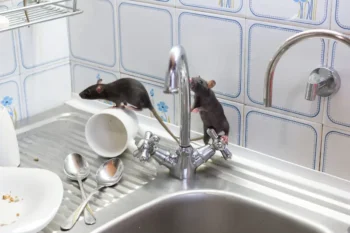
Yes, rodent droppings can absolutely make you sick. Whether it’s mouse feces in your pantry or rat poop in your basement, these unwelcome “gifts” carry serious diseases like hantavirus, salmonella, and more.
If you’ve noticed small, dark pellets appearing around your home that look like specks of dirt, don’t ignore them. What seems like a minor nuisance could be a sign of a rodent infestation and a genuine health hazard lurking in your living space.
What Diseases Can You Get from Mouse & Rat Droppings?
Rodent waste can transmit several dangerous diseases, some of which can be life-threatening:
Hantavirus
Hantavirus is the most serious concern when dealing with rodent droppings in St. Louis. This severe, sometimes fatal respiratory disease is transmitted when people breathe in air contaminated by infected rodent urine, droppings, or saliva.
Symptoms typically appear one to eight weeks after exposure and include:
- Early stage: Fatigue, fever, and muscle aches (especially in the thighs, hips, back, and shoulders)
- Late stage: Coughing, shortness of breath, and lungs filling with fluid
The danger: There’s no specific treatment, cure, or vaccine for hantavirus. Early medical attention is critical, but prevention remains the best defense.
Salmonellosis
Can you get sick from mice feces through food contamination? Absolutely.
Salmonellosis occurs when you accidentally consume food or water contaminated by rodent droppings. This is especially concerning in kitchens and pantries where mice and rats often forage. Symptoms include:
- Diarrhea
- Fever
- Abdominal cramps
Leptospirosis
This bacterial disease spreads through contact with water or soil contaminated by infected rodent urine, often found alongside droppings. St. Louis‘ humid climate and occasional flooding can increase leptospirosis risks.
Lymphocytic Choriomeningitis (LCM)
The common house mouse is the primary carrier of this viral infection, which can cause neurological disease. Exposure occurs through direct contact with droppings, urine, or nesting materials.
Other Rodent Dropping Health Risks
Beyond their droppings, rodents pose other health threats St. Louis homeowners should know about:
- Rat-bite fever: Transmitted through bites or scratches, or by handling infected rodents.
- Plague: Yes, it still exists, transmitted by fleas carried by infected rodents.
- Tularemia: A bacterial disease that can be spread through handling infected animals.
How to Tell Rat Poop from Mouse Droppings
Mouse Droppings
- Size: Small, about 1/8 to 1/4 inch long (roughly the size of a grain of rice)
- Shape: Thin and pointed at both ends
- Quantity: Mice produce 50-75 droppings per day
- Location: Typically scattered along walls, inside cabinets, and near food sources
Rat Droppings
- Size: Larger, about ½ to ¾ inch long (roughly the size and shape of an olive pit)
- Shape: Thicker with blunt, rounded ends
- Quantity: Rats produce 20-50 droppings per day
- Location: Often found in larger groupings near insulation, in attics, basements, and along established travel routes
Pro tip: Fresh droppings are dark, moist, and soft, while older droppings become gray, dry, and crumbly. Fresh droppings indicate an active infestation that requires immediate attention.
Is Rat Poop More Dangerous Than Mouse Poop?
Both rat and mouse droppings are dangerous to your health, but there are some distinctions:
- Mouse droppings are more commonly linked to hantavirus transmission in the United States. The deer mouse, white-footed mouse, and cotton rat (all found in St. Louis) are known carriers.
- Rat droppings tend to be associated with a broader range of bacterial infections, including leptospirosis and rat-bite fever. Because rats produce larger droppings and often infest areas with poor sanitation, the contamination can be more extensive.
The bottom line: Whether you’re dealing with rat feces or mouse poop, both require immediate attention and proper cleanup procedures to protect your family.
What to Do If You Find Mouse or Rat Droppings in Your St. Louis Home
Your first instinct might be to grab a broom or vacuum. Don’t. Disturbing rodent droppings can send hantavirus particles airborne, dramatically increasing your risk of infection.
Safe Cleanup Steps:
- Ventilate the area. Open windows and doors for at least 30 minutes before cleaning. Leave the area during this time.
- Wear protective gear. Put on rubber or latex gloves and an N95 respirator mask (not a basic dust mask).
- Don’t sweep or vacuum. This stirs up dangerous particles.
- Spray with disinfectant. Thoroughly soak droppings, urine, and nesting materials with a bleach solution (1 part bleach to 10 parts water) or a commercial disinfectant. Let it soak for at least 5 minutes.
- Wipe up carefully. Use paper towels to pick up the droppings and dispose of them in a sealed plastic bag.
- Disinfect the entire area. Mop floors and wipe down surfaces with disinfectant.
- Dispose of contaminated materials. Place gloves, mask, paper towels, and any contaminated items in a sealed bag and dispose of in a covered trash can.
- Wash thoroughly. Wash hands with soap and warm water immediately after removing gloves.
What Happens if You Eat Rat Poop by Accident?
It’s an unsettling thought, but accidental ingestion can happen (especially when rodents contaminate food storage areas).
If you’ve unknowingly consumed food contaminated by rat or mouse droppings, monitor yourself for symptoms of salmonellosis or other foodborne illnesses. Watch for:
- Nausea and vomiting
- Diarrhea
- Stomach cramps
- Fever
If symptoms develop, contact your healthcare provider and mention the potential rodent exposure. Most healthy adults recover without treatment, but young children, elderly individuals, and those with compromised immune systems face higher risks of complications.
Bug Out: Your St. Louis Rodent Control Experts
Rat and mouse droppings are a serious health hazard that demands swift, professional action. The longer rodents remain in your home, the greater the risk to your family.
At Bug Out, we’ve protected St. Louis homes and families for over 60 years. Our experienced technicians know the behavior patterns of every major rodent in the region, from deer mice in rural areas to Norway rats in urban neighborhoods.
So don’t put your family’s health at risk. If you’ve spotted rodent droppings in your home (or any other signs of an infestation), contact Bug Out today for a thorough inspection and customized treatment plan.
When it comes to rodent-borne diseases, the best cure is always prevention.


