

If your St. Louis yard is suddenly covered in raised dirt ridges, mystery holes, or dying turf, subterranean pests are actively destroying your landscape. However, before you buy traps or attempt a DIY fix, you must answer one critical question: which pest is actually digging up your lawn?
Because moles hunt insects underground, voles chew plant stems at the surface, and pocket gophers gnaw deep root systems, applying the wrong DIY method will waste time and allow the infestation to spread. Rapid reproduction rates mean a small population of burrowers can cause thousands of dollars in property damage in just a few weeks.
Key Takeaways:
- Proper identification of subterranean pests is critical because moles, voles, and pocket gophers require vastly different eradication methods based on their unique diets and habits.
- While physical barriers, habitat modification, and targeted trapping can slow down pest activity, established subterranean tunnel networks present severe challenges for home remedies.
- Professional wildlife control is often necessary to achieve complete elimination due to the rapid breeding cycles and deep-burrowing behaviors of these persistent animals.
Moles vs. Voles vs. Gophers in St. Louis: How to Spot the Difference
Summertime in eastern Missouri is prime season for subterranean pests. While homeowners frequently confuse moles, voles, and pocket gophers, their diets, behaviors, and property damage signatures are completely distinct.
- Moles possess paddle-shaped forefeet with prominent digging claws, reduced eyes, and hidden ears.
- Meadow voles, often called meadow mice, feature compact bodies, short tails, small rounded ears, and orange incisors built for gnawing.
- Pocket gophers are larger rodents with strong clawed front feet, small eyes and ears, and distinct external fur-lined cheek pouches used to carry food.
Recognizing the early warning signs of an infestation is key to protecting your St. Louis property from severe landscape destruction.
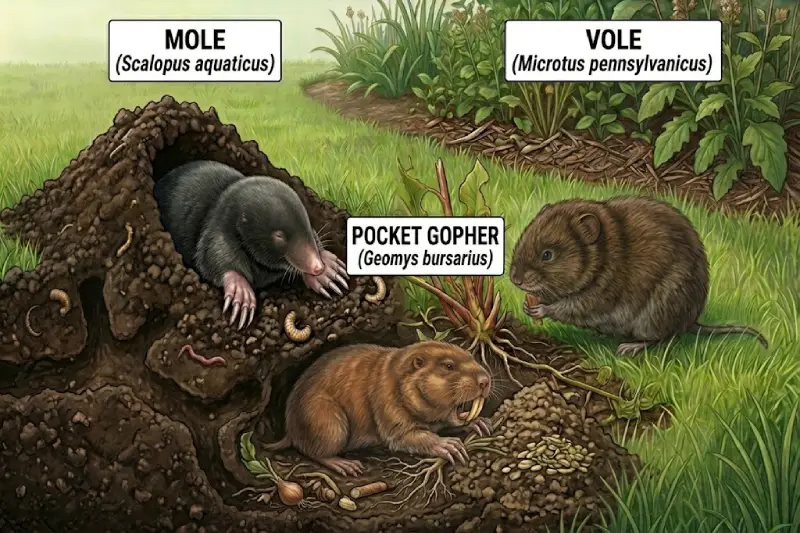
Key Differences: Common Burrowing Rodents in Missouri
If you notice subsurface activity across your yard, identifying the correct pest dictates the eradication strategy:
| Trait | Moles | Voles | Pocket Gophers |
| Diet & Motivation | Insectivores: Eat earthworms, white grubs, and beetle larvae. | Herbivores: Eat plant roots, flower bulbs, tree bark, and turfgrass stems. | Herbivores: Eat roots, tubers, bulbs, and surface vegetation near burrow openings. |
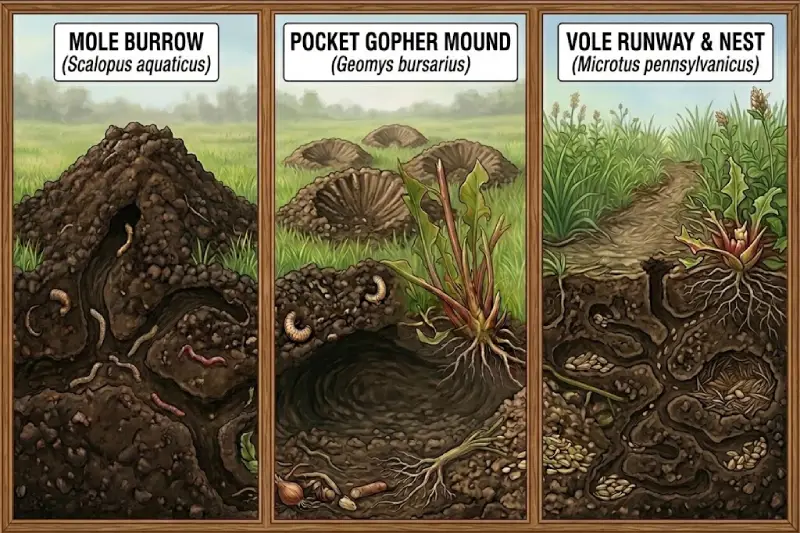
| Lawn Signs | Subterranean: Raised, spongy ridges and symmetrical, volcano-shaped dirt mounds with central plugs. | Surface-level: Open 1–1.5″ bare runways and clear entry holes near foundations or trees. | Subterranean: Crescent-shaped or horseshoe-shaped dirt mounds with off-center, angled dirt plugs. |
| Habitat | Underground: Prefer damp, loose soil deep beneath the surface. | Aboveground/Shallow: Live in tall grass, heavy mulch, and dense groundcover; use shallow burrows. | Underground: Build extensive, deep lateral tunnel systems with dedicated nesting and storage chambers. |
| Vegetation Damage | Indirect: Heave up turf and dislodge plant roots while tunneling for insects. | Direct: Kill plants, shrubs, and trees by girdling roots and stripping lower bark. | Direct: Kill plants and trees by chewing main root systems from below or pulling whole plants into burrows. |
Compare Their Nests – Moles vs Gophers vs Voles
3 Proven Tips to Get Rid of Voles
Preventing and managing a vole infestation requires removing their protective cover, trapping active paths, and physically blocking access to vulnerable root systems:
- Eliminate Surface Cover: Mowing your lawn regularly to a short height removes protective cover. Clear dense weeds, avoid deep layers of wood mulch around flower beds, and keep groundcovers trimmed back from the foundation.
- Set Targeted Snap Traps: Position mouse snap traps baited with peanut butter, apple slices, or oatmeal directly inside active vole surface runways. Place traps perpendicular to the path for maximum yield, and cover them with a box or tile to keep non-target animals away. Avoid applying retail toxic baits independently, as pets and native wildlife face secondary poisoning risks.
- Install Physical Barriers: Shield young trees, ornamentals, and garden beds using 1/4-inch hardware cloth or heavy-duty plastic cylinders. Bury the wire mesh at least 6 inches into the soil and extend it 12 inches above the ground line to block both subterranean burrowing and surface climbing.
3 Proven Tips to Get Rid of Moles
Because moles live underground and feed strictly on soil insects, eradicating them requires targeting their food supply and disrupting their active travel tunnels:
- Control Subterranean Food Sources: Reduce the primary food supply driving moles to your lawn by treating for lawn grubs and soil pests using targeted beneficial nematodes or eco-friendly grub controls. While earthworms will remain, limiting grub populations drastically reduces mole feeding activity in Missouri turf.
- Deploy Subterranean Scissor or Harpoon Traps: Locate active, straight travel runs by flattening raised ridges with your foot and checking which paths are rebuilt within 24 hours. When setting mechanical mole traps (such as scissor-jaw or harpoon traps) in dense St. Louis clay soil, pack loose topsoil into the tunnel trigger area so heavy dirt clods don’t obstruct the trap mechanism when fired.
- Apply Castor Oil Repellents: Spray a concentrated castor oil-based repellent across the affected lawn areas. Castor oil coats the mole’s natural food supply, causing mild digestive upset that encourages them to migrate away from treated soil without harming your grass or landscaping.
3 Proven Tips to Get Rid of Pocket Gophers
Gophers create extensive, deep tunnel networks and can rapidly destroy root systems, making early containment and physical disruption critical:
- Set Dual-In-Line Gopher Traps: Heavy St. Louis clay makes probing difficult, so use a sturdy metal soil probe 6 to 12 inches back from the flat side of a horseshoe-shaped dirt mound until you feel a sudden drop in resistance, indicating the main tunnel. Unearth a portion of the main tunnel and place two gopher-specific box or cinch traps facing in opposite directions to catch the gopher regardless of which way it approaches.
- Protect Root Balls with Wire Baskets: When planting new trees, shrubs, or flower bulbs, install pre-formed 3/4-inch gopher wire baskets directly into the planting hole. This creates a permanent physical barrier that prevents gophers from chewing through primary root systems from below.
- Disrupt Deep Tunnel Systems: Regularly probe and collapse active lateral tunnels and flatten dirt mounds using a garden rake or heavy roller. Removing surface mounds allows you to track fresh digging activity immediately while forcing gophers to spend energy rebuilding instead of feeding on your landscaping.
Need Help from a Professional Wildlife Specialist?
While DIY tactics can slow down initial activity, subterranean pests possess unique biological defenses that make total elimination extremely difficult for homeowners:
- Voles Multiply Too Fast: With a single female producing up to 10 litters per year, basic snap traps rarely keep pace with their exponential breeding cycles.
- Moles Dodge Misplaced Traps: Moles routinely abandon disturbed feeding runs and dig deeper, secondary travel networks the moment they sense human scent or improperly set harpoon traps.
- Gophers Burrow Beyond DIY Reach: Pocket gophers build complex tunnel systems up to 6 feet deep, making surface probing and retail traps ineffective against established nests.
If active burrowing is ruining your landscaping, don’t waste time and money on trial-and-error solutions. Our local rodent and wildlife management team utilizes industrial-grade subterranean barriers, targeted baiting systems, and specialized equipment customized for St. Louis soil conditions.
Give us a call today to schedule a comprehensive property inspection and stop lawn damage before it spreads.


