
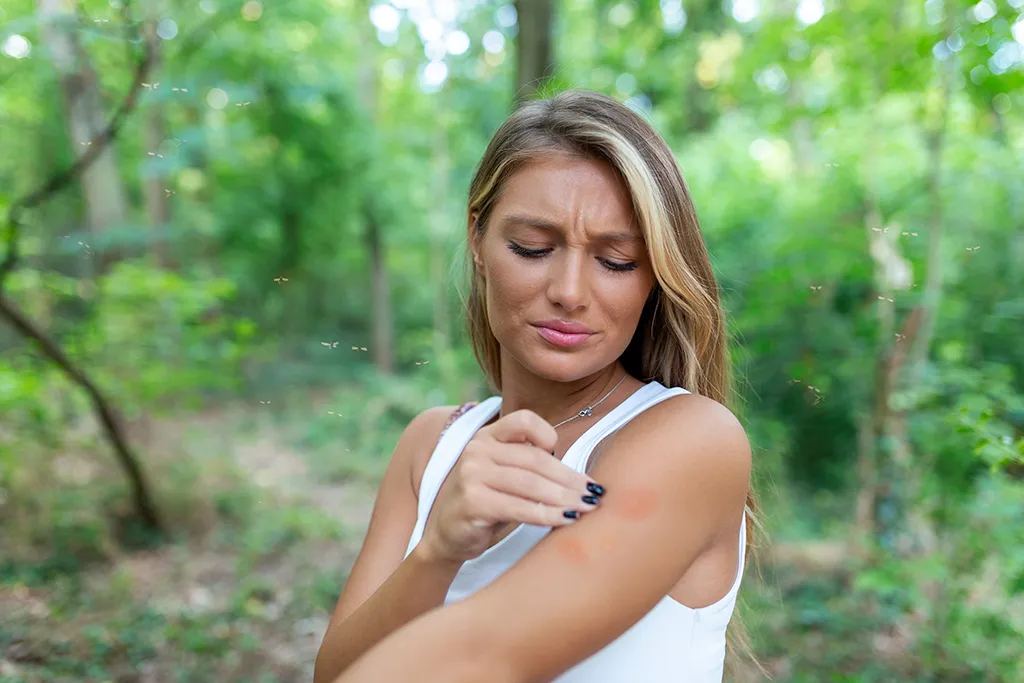
It’s no secret that mosquitoes bite. Using their specialized proboscis, female mosquitoes feed on blood from humans, birds, and small mammals alike. Bites can result in itchy marks or rashes, and in some parts of the world, mosquitoes transmit serious diseases. Fortunately, mosquito-borne illness is uncommon in Missouri, though the bites themselves remain bothersome.
For effective relief and protection, contacting the experts at Bug Out can help reduce mosquito populations around your home.
Why Are Mosquitoes Attracted to Blood?
Female mosquitoes bite to access the nutrients in blood, including iron, proteins, and amino acids, which are essential for egg development. Once she feeds, the female can reproduce and lay eggs. While it’s often called “biting,” the mosquito is actually piercing the skin with its proboscis, functioning almost like a tiny needle.
The proboscis contains two separate tubes. One tube injects saliva with chemicals that reduce pain, thin the blood, and prevent clotting, while the other tube draws up the blood. Male mosquitoes, in contrast, do not bite at all.
Can Your Dog or Cat Get Mosquito Bites?
Mosquitoes will bite pets just as readily as humans, including cats and dogs. Cats often avoid many bites thanks to their dense fur, but exposed spots like ears and noses remain vulnerable. Dogs are more likely to get bitten, sometimes repeatedly. Besides causing itchy red spots, mosquitoes can transmit dangerous diseases to animals. Consulting a professional mosquito exterminator can reduce the risk and keep pets protected outdoors.
Common Mosquito Bite Reactions in Missouri
Mosquitoes tend to target exposed areas of the body, such as arms, legs, and the neck. Their bites can be irritating and uncomfortable. Mosquito bites can trigger a range of reactions, from mild irritation to more serious symptoms, including:
- Immediate Reaction: Pinkish-red bumps that are itchy appear within minutes after a mosquito pierces the skin. Over the next day or two, these bumps can darken and become more inflamed.
- Size of Bumps: Usually less than ½ inch across, these small bumps are easy to spot on exposed skin.
- Itching: Scratching at mosquito bites can worsen irritation, sometimes leading to bruising or additional rashes.
- Severe Symptoms: In rare cases, mosquito bites can cause fever, severe headaches, nausea, or fatigue. Always seek medical advice if these occur.
What Is the Diet of a Mosquito?
Mosquitoes aren’t sustained by blood alone. Female mosquitoes only bite for reproduction, and their diet differs at each of the following stages of life:
- Larva: As larvae, mosquitoes feed on algae, bacteria, and other organic matter in the water where they live.
- Pupa: Pupae do not eat at all, instead preparing for transformation into adult mosquitoes.
- Adult Male: Adult male mosquitoes feed on nectar from flowers and other plants for energy.
- Adult Female: Adult female mosquitoes feed on nectar but also bite humans, birds, small mammals, and more to obtain blood needed for egg production.
Male vs. Female Mosquito Feeding Habits
Only female mosquitoes bite humans and animals to feed on blood. Male mosquitoes, however, have a very different diet and behavior. They differ in the following ways:
- Female Mosquitoes: Female mosquitoes require a blood meal to reproduce, allowing them to breed and lay eggs. They also feed on nectar, which makes up a large part of their diet.
- Male Mosquitoes: Male mosquitoes do not feed on blood and rely solely on sugar from plant nectar. They use their proboscis to collect nectar and are not responsible for transmitting diseases.
Can Mosquitoes Survive Without Eating?
Mosquitoes have a naturally short lifespan, and without access to food, they cannot survive for long. Female mosquitoes that fail to find a blood meal may perish within just a few days. During winter dormancy, mosquitoes in Missouri can go for months without eating. Overall, the lack of a reliable food source is a major reason that mosquito populations can decline.
Call Bug Out at the first sign of mosquitoes on your Missouri property to tackle the problem before it grows.


