
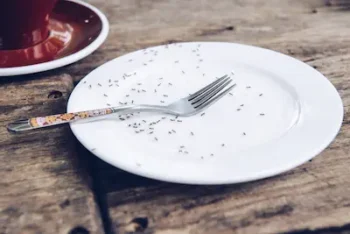
 Ants eat a wide variety of foods, so keeping your home free of food debris, crumbs, and dirty dishes is crucial to preventing an infestation. Although ants have an appetite for many foods, there are a few that are more likely to trigger an infestation. At Bug Out, we’ve put together a list of foods that are more likely to attract ants and a few tips on keeping ants at bay.
Foods That Attract Ants to Your Home
When ants enter your home, they are looking for food and water sources. In addition to moisture in your home from leaky pipes or other areas where water has gathered, food is also a significant attractant for ants. From pavement ants to carpenter ants, once they find food, they will return to the nest and continue to forage in your home for food.
Greasy Foods
There are types of ants that like protein and will seek out foods that have that nutritional content. Foods with lots of fat and grease are a favorite of theirs, including the wrappers from the meals. Be sure to clean up items such as fast food wrappers after eating to keep ants from discovering them.
- Cooked or raw meat scraps: This is a primary source of protein, a crucial building block for the colony. Worker ants carry meat back to the nest to feed the queen and, most importantly, the growing larvae, fueling the expansion of the colony’s population.
- Pet food (kibble and wet food): A highly prized, all-in-one meal. Pet food is formulated with a perfect balance of proteins, fats, and carbohydrates, making it a complete and convenient source for all of the colony’s nutritional needs.
- Cheese and other dairy products: These items offer a dense combination of both fats for energy and proteins for growth. Solid cheese is easy for ants to carry, while spilled milk or yogurt provides these nutrients along with essential moisture.
- Bacon grease and butter: As a nearly pure form of fat (lipids), these are an incredibly high-potency energy source. This concentrated energy is vital for fueling worker ant activity and supporting the high metabolism of the egg-laying queen.
- Oils and salad dressings: Liquid oils are an easily transportable source of fat that ants can drink and store for the trip back to the nest. Salad dressings are even more attractive because they often combine these oils with other lures like sugar or traces of protein.
Sweet Foods
Most types of ants are attracted to sugary foods. Ants like the smell of fruit, sugar, and syrup, and will quickly surround food once it has been discovered by the scout ant. After a cookout or party, it is vital to make sure that the leftover sweets are cleaned up and put away.
- Fruits: Ripe and decaying fruits are a significant source of sugar for many ant species. They are particularly fond of fruits with high sugar content like melons, berries, and mangoes.
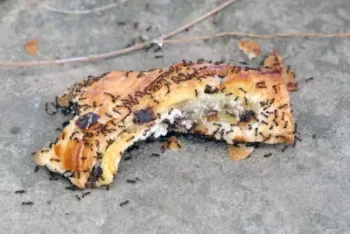 Sticky residues and spills: This group covers the liquid and semi-liquid sugars that are a primary target for ants. Their sticky nature creates a high-energy, long-lasting food source that a single scout can easily find and bring back to the colony. Examples include honey, maple syrup, spilled soda, fruit juice, and the film inside unrinsed recycling containers.
- Crumbs and dry goods: These are the small, overlooked morsels that can provide a feast for an entire colony. Even the fine dust from these items is a significant energy jackpot for a tiny scout ant. This category includes crumbs from cookies, pastries, and donuts, as well as sugary breakfast cereals and spilled granulated sugar.
- Candy and sweets: The ultimate high-potency treat for an ant. These items are almost pure, concentrated sugar, making them an irresistible and energy-dense find. Examples are hard candies, gummies, chocolate, frosting, and melted ice cream.
Leftovers and Trash
Some ants, such as pavement ants, will eat any food items that fall onto the ground from discarded wrappers and bubble gum to other food-related scraps and trash. To help keep these ants away, be sure to store your waste away from your home and in a garbage container with a sealed lid.
- Food and beverage containers: The sweet or savory residue left inside unrinsed containers. This includes soda cans, juice boxes, jelly jars, and empty pet food cans, all of which provide a concentrated food source.
- Soiled paper and cardboard: Absorbent materials that have soaked up grease and food particles. This category covers discarded pizza boxes, used paper towels and napkins, and greasy food wrappers.
- Raw organic waste: Direct food scraps found in trash or compost. This includes decomposing fruit peels, vegetable scraps, apple cores, coffee grounds, and discarded bones with bits of meat or marrow still attached.
- Collected household grime: Food matter that accumulates in less obvious places. This refers to the sludge of food particles in a kitchen sink drain or the collection of crumbs and debris within a vacuum cleaner bag.
- Scavenged insects: A natural protein source for ants. This includes other dead bugs, such as flies, moths, or spiders, commonly found on window sills, in basements, or in light fixtures.


