
Key Takeaways:
- Termite damage does not have a single common location and can appear anywhere throughout your home.
- Watch for bubbling or blistering paint and warped laminate flooring, which can resemble water damage and are often misdiagnosed.
- Small piles that look like sawdust, salt, or pepper may actually be termite droppings known as frass.
- If you notice damage, avoid opening walls, as this can cause termites to spread. Contact a professional right away.
What Are the Signs of Termite Damage?
Wood damage is one of the most common indicators of termite activity in a home. When termites are present, the wood may be weakened, hollowed out, or riddled with hidden tunnels. This type of damage can also appear as:
- Wall and Ceiling Cracks: Cracks may appear along interior walls, ceiling beams, or rafters as termites weaken wooden supports.
- Warped or Sagging Floors: Floors can bubble, dip, or sag when termites damage the wood beneath the surface.
- Hollow or Weak Woodwork: Floorboards and baseboards may feel soft, sound hollow, or break easily due to internal tunneling.
- Damaged Roof Materials: Termite activity can weaken roof structures, sometimes leading to cracked or broken roof tiles.
- Sticking Doors and Windows: As wood frames shift or warp from damage, doors and windows may become difficult to open or close.
What Should You Look for When Checking Wood for Termites
Termites are well known for consuming wood, yet the damage they leave behind is not always obvious at first glance. Their tunneling breaks down cellulose and causes the wood to become brittle and hollow. Wood stored outside may look intact on the surface but be extensively hollowed underneath. Common indicators include:
- Hollow Wood
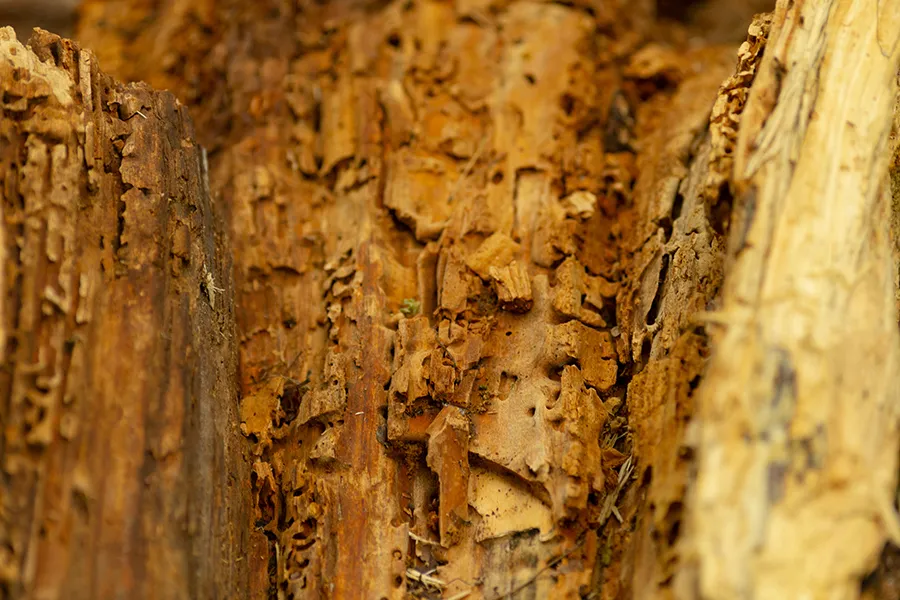
Termite damage often creates hidden cavities inside wood, making it difficult to spot early on. At first, the surface may look perfectly intact. As damage worsens, the wood can begin to ripple or collapse inward, leaving only a thin layer of paint or finish holding its shape.
One way to check for hollow wood is by gently tapping baseboards or window frames with a screwdriver handle. Solid wood produces a dull, firm sound. Wood damaged by termites will sound hollow or papery.
- “Water” Damage
At first glance, termite damage can look very similar to water damage because both can cause buckling wood and bubbling paint. The cause, however, is entirely different. Water damage leads to wood swelling, darkening, and rotting into cube-shaped fragments, while termite damage produces smooth, hollow tunnels that run with the natural grain.
Knowing how to spot the difference is critical. If you break open damaged wood and notice soil or mud lining the interior, termites are the culprit. Rot alone will never leave behind packed dirt. This discovery should prompt immediate action.
- Frass
If you find small piles along your baseboards that look like sawdust or grains of salt and pepper, take a closer look. These piles are often frass, which is the waste produced by drywood termites and pushed out through tiny exit openings called kick-out holes.
How to recognize frass is by its consistent appearance. The pellets are uniform in size and shape, making them a clear indicator of an active infestation. This is one of the most reliable signs of drywood termites.
Where to Look for Termite Damage in Your House
Termite damage often starts out of sight, hidden deep within a home’s structure. As an infestation grows or becomes more severe, visible warning signs begin to appear, including damaged wood, warped flooring, and sagging ceilings.
Identifying a termite problem means separating termite activity from issues like moisture damage or normal structural wear. The most noticeable signs of termite damage are commonly found in the following areas of the home:
- Walls: Termite damage in walls may appear as hollow spots, blistered paint, or small mud tubes running along the surface.
- Ceilings: Sagging or discolored areas in ceilings can indicate that termites have compromised the wooden beams or joists above.
- Foam insulation: Termites may tunnel through foam insulation, leaving visible holes and weakening the material’s structure.
- Slabs: Cracks or small openings in concrete slabs can allow subterranean termites to access and feed on wood framing beneath.
- Drywall: Termite activity behind drywall often causes bubbling paint, cracks, or small holes where frass is expelled.
- Flooring: Buckling, hollow-sounding floorboards, or warped wood are common signs of termite damage in floors.
- Tiling: Loose or cracked tiles may signal that termites have damaged the wooden subfloor underneath.
- Windows: Termite damage around windows can cause sticking frames, chewed wood, or visible tunnels near the sill.
Recognizing Termite Damage in Walls, Flooring, and Foundations
Termite damage can affect many parts of your home, often in ways that are easy to overlook. Different materials show distinct signs of infestation, so knowing what to look for is key to catching a problem early. Here’s how termite damage commonly appears in different materials around your home:
- In Drywall and Sheetrock: Look for bubbling paint, which can resemble a water blister but actually indicates tunnels just beneath the paper surface. Tiny pinholes often capped with a speck of dirt may also appear. These are exit points for swarmer termites leaving the wall.
- In Flooring: In laminate or hardwood, termite damage may show as blistering or sagging. For tiled floors, loose or hollow-sounding tiles can indicate termites eating the subfloor or moisture barrier underneath.
- In the Foundation: Mud tubes, pencil-sized tunnels made of soil and saliva, are created by subterranean termites to travel across concrete foundations. These protective “highways” keep termites from drying out as they move from soil to your siding.
What to Do If You Find Termite Damage in Missouri
If you see termite damage, don’t try to pry open walls or expose the affected area. Doing so can cause the colony to spread further or create new sub-colonies. We recommend covering the damaged section and contacting a professional termite exterminator for a complete inspection. At Bug Out, our team can carefully assess the situation and protect your home in Missouri from further infestation.
Worried about termites? Call us now and discover how our team can protect your property.